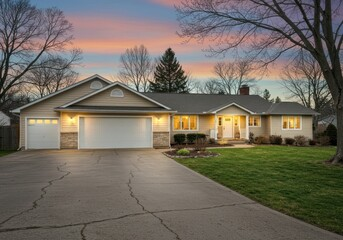
Concrete is a remarkable material that can withstand a lot of wear-and-tear, but it does eventually get damaged and need repair. At Innovative Spaces, we often help homeowners with concrete repairs, but there are times when replacement is a better option.
Concrete repair is quick and easy nowadays, but it didn’t used to be. Mudjacking was the old go-to method, but it left injection holes and wasn’t a long-term solution. Visit https://www.gkconstructionsolutions.com/ for more information.
Cracks
Cracks in concrete are a common sign that the slab needs repair or replacement. However, it’s important to understand how large the cracks are and if they’re spreading in order to make the right decision. Small surface cracks, if repaired early on, can prevent further damage and maintain a safe, stable surface.
Hairline cracks less than 1/16 of an inch wide are cosmetic only and do not compromise the structural integrity of concrete. However, they can be a source of water infiltration, freeze-thaw cycles, spalling or discoloration. If a property has these type of cracks, a professional can seal them to stop moisture intrusion and slow the progression of deterioration.
Widespread, deep cracks that run through the full thickness of concrete are a sign of structural failure. They may be caused by foundation movement, soil shifts or water intrusion. Repair methods like grouting, routing and filling or stitching can be effective in stabilizing the structure.
Excessive weight cracks are often caused by over-loading. A commercial concrete slab is typically rated for a certain amount of weight, and exceeding that limit can cause damage. This is especially true in areas that experience frequent rain, snow or ice.
Shrinkage cracks form within the first few days of installation as concrete dries. They appear in grid-like patterns or straight lines near joints and are considered “active” if they show some change in direction, width or depth over a measured period of time. However, even dormant shrinkage cracks can become a source of moisture penetration.
Concrete is a porous material and its microscopic pores can absorb water, expanding it during freezing and contracting again as it thaws. This recurring process can generate internal stresses that eventually lead to concrete deterioration and surface cracking.
Unsightly cracks, gaps and sinking, heaving and other surface problems can be a serious tripping and safety hazard as well as an eyesore. These issues can also cause damage to vehicles or equipment parked on the concrete. Depending on the severity, repairs may be able to resolve these symptoms in their early stages but may require replacement in the long run.
Pooling Water
When rain storms come, you expect water to run off your concrete slab – not pool in puddles. If you have areas where water lingers after a rainstorm, that isn’t normal and is likely due to shifts in the soil underneath your slab. This can create low spots that collect runoff instead of draining properly, leading to surface damage and foundation issues.
Pooling water can also be caused by a leaking pipe or plumbing problem beneath your slab that isn’t visible to the eye. These leaks can cause hydrostatic pressure, which pushes water through even the smallest cracks and breaks. This is an indication that you’ll need to replace the entire slab instead of just repairing it.
A cracked and sinking concrete slab can’t provide the proper support for your home, and it can eventually lead to serious structural issues. Concrete replacement is much more cost effective than repairs and will ensure that your concrete is safe and stable.
The decision between repairing or replacing your concrete isn’t always clear-cut. Repairing is cheaper and faster, but if you’re noticing significant cracks, spalling, and discoloration, replacing may be the best option for long-term stability and safety.
If you’re not sure whether your concrete is a candidate for repair or replacement, contact us to schedule an inspection. We’ll determine the cause of your concrete damage and offer a recommended solution.
Concrete repair and replacement is a big investment, but it’s one that will protect your property for years to come. By incorporating concrete maintenance into your regular routine, you can keep your driveways, patios, and sidewalks looking great, and prevent costly repairs and replacements in the future.
Potholes
While concrete is known for its durability, it is not invincible and requires proper maintenance to extend its lifespan. Recognizing the signs that concrete needs repair or replacement and acting quickly can save homeowners money in the long run and avoid larger issues down the road.
Hairline cracks and surface deterioration are normal, but when the concrete begins to crumble it is time for a replacement. Unaddressed cracks will spread, leaving the underlying concrete exposed to moisture, freeze-thaw cycles, and other damage.
A crumbling concrete surface is also a hazard for pedestrians who may trip and fall, as well as cars that will hit the deteriorated pavement, causing damage to their wheels or suspensions.
Potholes are a clear indicator that the structural integrity of the concrete has been compromised and is no longer safe for use. They can be caused by a variety of factors, such as freeze-thaw cycles, exposure to de-icing salts, or poor-quality concrete mixes.
Like cracks, potholes will spread if not addressed. They are often caused by water seepage into the cracks which then expands and sinks into the underlying concrete, weakening it and causing further deterioration.
Concrete deterioration is not limited to driveways, it can occur in sidewalks, patios, pool decks and more. While repairing these surfaces can help delay the need for replacement, ignoring the issue will only lead to more expensive repairs in the future.
In some cases, repairing a concrete slab or surface is the best option until it reaches a point where it must be replaced completely. Contacting a professional to assess the condition of your concrete and make recommendations can help you determine whether a repair or replacement is the best option for your home. A professional can help you determine the right course of action to ensure that your concrete lasts for as long as possible and protects your investment. For more information on extending the life of your concrete, reach out to Tolliver & Curl Pavement to request an estimate and schedule an inspection. We look forward to assisting you! Our experts are available to assist with all your residential and commercial paving and excavation needs.
Uneven Surfaces
Uneven surfaces in your concrete can be unsightly, but they also pose a safety concern. When a surface becomes uneven, it creates tripping hazards for people and vehicles alike. It can also be a sign that the concrete is starting to break down and needs to be replaced entirely.
If you notice that your concrete is becoming uneven, you should contact a professional to take a look and determine the cause of the issue. They will use a technique called concrete leveling to restore the surface and make it smooth again. The cause of the uneven surface can be a number of things, including soil settlement, water damage, or other factors.
When a slab of concrete begins to sink in certain areas, it is typically due to the soil underneath shifting or compressing. This can be caused by natural environmental factors, such as excessive rain or water flow, which can wash away the soil that supports your concrete and cause it to sink. It can also be a result of improper installation when the slab was first poured.
Uneven concrete is a common problem that can be expensive to repair. Not only can it be a tripping hazard for your family, friends, and guests, but it can also lead to foundation issues or other costly problems with the structural integrity of your home.
Another early warning sign that your concrete is in trouble is discoloration. Dark spots on your concrete are a surefire sign that water is seeping into the structure. Water that gets into concrete degrades it from the inside out, causing cracking, scaling, and other unpleasant side effects.
Uneven concrete is more than just a cosmetic problem; it poses safety concerns, reduces curb appeal, and may affect the value of your home. If you have noticed any of these signs in your concrete, it is important to act quickly to prevent the situation from getting worse. By addressing concrete damage as soon as you notice it, you can avoid more expensive repairs and enjoy safe and secure concrete surfaces for years to come.